How Long Should a Leather Dog Collar Last With Daily Use?

Visually, a dog collar may seem alright long after the collar’s material will deteriorate in strength. Nonetheless, a collar that has grown darker, gotten more pliable, and developed a patina may continue to function normally.
This becomes important when thinking about the leather dog collar lifespan.
An everyday leather dog collar that is constructed properly can perform its function for several years. Some collars may even last longer. Nonetheless, there is no one-size-fits-all answer to that question, as a lot depends on the size and behavior of the dog, type of leather used, quality of making, exposure to water, and proper care of the collar.
For example, a gentle dog walking on solid ground will require a very different collar type from a powerful and active dog meandering through wetlands and untamed woods.
So the issue isn't necessarily the longevity of the leather collar, but its ongoing efficacy.
How Long Does a Leather Dog Collar Typically Last?
A good-quality leather dog collar can last years if the leather used in its production is top-notch and if the craftsmanship and maintenance are very good.
Daily usage challenges the material. When the collar is constantly bent each time the dog lowers its head or moves it. The force created by the leash through the buckle, stitches, and connection points brings wear to the collar. Moreover, the surface of the collar contacts the dog’s fur. As the collar is exposed to the natural environment, it ages naturally.
However, those conditions do not mean that they would shorten the leather’s lifespan. Leather is designed to go through this process of adaptation if it possesses the optimal amount of flexibility and strength.
A key point here is the difference between the terms aging and deterioration.
When a collar ages, it becomes darker, softer, and develops minor scratches. Aging does not cause a collar to sustain damage because of its exposure to the environment. On the other hand, if cutting, thinning of the collar around the buckle holes, tearing of the collar at the points of high stress, or loss of stitches has begun, it indicates wear.
What Factors Affect the Lifespan of a Leather Dog Collar?
The strength of leather depends on many more factors than the thickness.
A thick leather piece may become unusable if it is not appropriate for the collar production, while thinner leather may feel good but not strong enough for a strong dog. The characteristics used for collar creation will logically depend on how it is supposed to function.
Several factors have the greatest influence on leather dog collar durability.
Leather quality and fibre structure
Good leather has a dense internal fibre structure that can tolerate repeated flexing without quickly breaking down.
The surface appearance alone does not reveal this. Two collars may look similar when new while behaving very differently after months of use.
Leather that remains structurally sound can flex repeatedly at the same points. Poorly prepared or heavily corrected material may eventually stiffen, crack, or weaken where movement is concentrated.
Construction at stress points
The areas around buckle holes, leash attachment rings, folded sections, and stitching carry concentrated force.
These are often the first places where a collar reveals how carefully it was made.
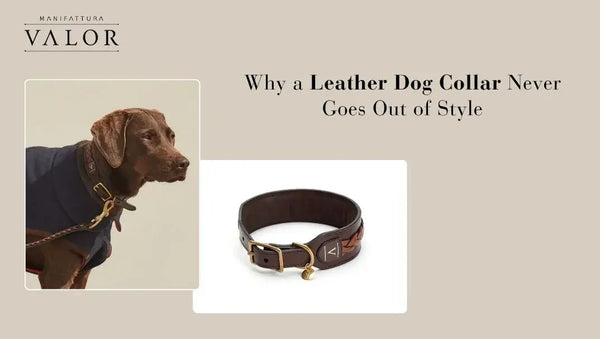
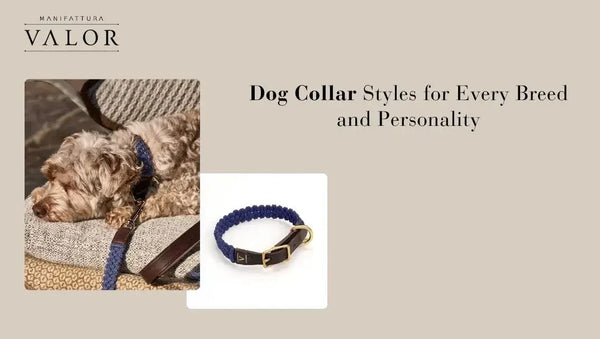
A carefully made handmade leather dog collar can pay particular attention to these details, especially in areas that experience repeated tension during everyday use.
Fit and proportion
A collar that is too loose can shift continuously around the neck, increasing unnecessary friction. One that is too tight restricts the natural movement of the neck and places excessive pressure on a smaller contact area.
The width and weight of a collar should likewise correspond to a dog’s size.
A high-quality leather dog collar is not merely the toughest or thickest collar available; it should have sufficient rigidity to endure the stress it will be subjected to while still being flexible enough for comfortable use.
How Daily Activities Affect Your Leather Dog Collar
Daily activity determines how and where leather begins to age.
Walking creates constant small movements. The collar bends around the neck, changes position as the dog turns its head, and experiences friction against the coat.
Leash pulling creates more concentrated strain.
When a dog suddenly reaches the end of the lead, force travels through the attachment point and collar structure. For dogs that regularly pull, the leather surrounding the buckle and hardware experiences significantly more repeated loading than it would during a relaxed walk.
Outdoor conditions add further demands.
The wet grass, rain, and mud expose leather to moisture, coupled with the humidity. The dust and dirt enter the cracks and wrinkles of the leather. With repeated drying at high temperatures, a wet collar will lose its softness over time, since fine leather has some flexibility.
This is why a long lasting leather dog collar depends partly on how it is used and partly on what happens after use.
A collar designed for daily life should accommodate movement. It should not become fragile simply because it has been worn.
Does the Type of Leather Make a Difference in Durability?
Yes, but it can’t be said that there is a single leather from which the right collar could be made.
The best leather for dog collars is that which achieves an optimal combination of strength, weight, flexibility, dog size, and dog activity.
Cowhide is often chosen in situations when the need for structural strength and durability arises. It is able to provide a reliable basis for any day-to-day equipment while remaining sufficiently supple at the same time.
Calf leather has a more delicate and soft nature. Its smooth surface and elasticity can make it especially favorable from the point of view of comfortable contact.
Deer leather is loved for its wonderful softness and flexibility. It is inherently flexible, making it useful wherever the benefits of using flexible materials are important.
Manifattura VALOR works with different leathers for different purposes, such as cowhide, calfskin, goatskin suede, and deerskin. This solution reflects one of the key principles of high-quality work: choose the material for its features when it is made into an end product, and not for its appearance.
Judging by the label only, a genuine leather dog collar cannot be evaluated in terms of the material used for its manufacturing.
The leather quality, its processing, thickness, and making influence its properties over time. Good leather can still be useful even though its surface has changed.
It may have developed a patina, but its layer under the surface will still continue to do its job.
Signs That Your Leather Dog Collar Needs to Be Replaced
Patina is not a reason to replace a collar. Surface darkening, natural marks, and increased softness can all be normal signs of use. Replacement should be considered when the structural parts of the collar begin to lose reliability.
Check the collar regularly for:
-
Deep cracks that extend through the leather
-
Significant thinning around buckle holes
-
Loose, broken, or damaged stitching
-
Leather separating at folded or layered sections
-
Distorted or damaged hardware
-
Weakening around the leash attachment point
-
Persistent stiffness that prevents the collar from flexing naturally
The buckle holes deserve particular attention. They are repeatedly compressed and pulled whenever the collar is adjusted or placed under leash tension.
A collar should be replaced because its structure is no longer dependable, not because it has acquired the visible history of daily use.
How to Make a Leather Dog Collar Last Longer
Understanding how to care for a leather dog collar starts with minimizing unnecessary stress on the material.
When you arrive back from a walk in wet or muddy conditions, definitely wipe off any dirt on your collar with the use of a moist cloth, so that it can dry out in the air.
Make sure that you do not place your wet leather items near any heater since this can cause them to dry too quickly.
Leather care should also remain measured. Constantly applying conditioners or oils can be as unhelpful as neglecting the material altogether.
A practical routine includes:
-
Removing dirt and moisture after demanding outdoor use
-
Allowing wet leather to dry naturally
-
Using an appropriate leather care product when the material becomes dry
-
Checking stitching, edges, buckle holes, and hardware regularly
-
Avoiding prolonged exposure to standing water or saltwater
-
Storing the collar in a dry environment where the leather can breathe
If leather is looked after correctly, it will continue to perform and achieve character as time goes by. Manifattura VALOR shares this view of caring for goods in order to maintain their specific attributes for many years.
Is a High-Quality Leather Dog Collar Worth the Investment?
The value of a high quality leather dog collar becomes easier to understand after extended use.
A collar is not an occasional accessory. It is a daily contact piece exposed to movement, friction, weather, and repeated handling.
Small construction decisions therefore become increasingly important over time.
Smooth, carefully finished edges reduce unnecessary abrasion against the coat. Secure stitching supports areas exposed to repeated strain. Appropriate leather density allows the collar to flex without immediately losing its structure. Well-proportioned hardware remains stable without adding unnecessary weight or pulling awkwardly against the neck.
A premium leather dog collar crafted from carefully selected materials is yet another way to demonstrate quality.
Hand finishing achieves perfection through minute details that could enhance a product's efficacy over time, such as edge treatment, stitching layout, hardware assembly, and durability for areas experiencing heavy stress.
The mission here is not to make a collar that does not get affected by time at all.
Instead, one should make a durable leather dog collar that ages gracefully.
A good leather dog collar will become truly acquainted with use while retaining its major required qualities.
The absence of durability in leather does not mean a collapse of the dog collar anytime soon.
The leather will be softer and will change color upon usage; there will be marks of the years the collar has existed.
What must not change is the great level of trust in that material in terms of its utmost importance.
In conclusion, longevity is not simply about making a piece of leather last longer.
It's about making that piece of leather age beautifully and serve its true purpose all the time.