Why Serious Riders Only Trust Luxury Leather Horse Halters

Most halter-related problems begin long before visible wear appears.
A horse that rubs occasionally after turnout. Slight coat loss beneath the crownpiece. A subtle reluctance when the halter is brought forward. These signs are easy to dismiss because the halter itself often looks perfectly functional.
Yet every hour a horse spends wearing a halter creates thousands of small movements between material, coat, skin, and underlying anatomy. Material behaviour, construction, and fit are the real factors that decide how nice various interactions will be, not less than appearance.
Riders who are keen on comfort, handling, and durability of the horse over time will realize the difference between a regular horse halter and the one made with anatomical consideration only after some time.
The Hidden Danger of Cheap Halters Your Horse Can't Tell You About
Most nylon halters for horses are not prone to breaking under normal use.
They do still have a problem with long-term contact.
Synthetic webbing forms a more or less rigid contact area. With dust, dried sweat, and stable particles settling into the weave, the material can become quite abrasive against the spots that are changing through movement.
The head is very exposed. Every time the head is lowered or raised, there is a slight movement under the crownpiece. Over time, repeated friction may cause coat wear, skin irritation, or sensitivity to pressure.
Adding to the problems can be the hardware placement. Thick seams, large folds, and badly positioned buckles often focus pressure onto very small areas rather than spreading it out over a larger surface.
While some horses do a wonderful job of adjusting, others let you know they are in pain by rubbing, being head shy, or changing their behaviour in ways that you would never suspect.
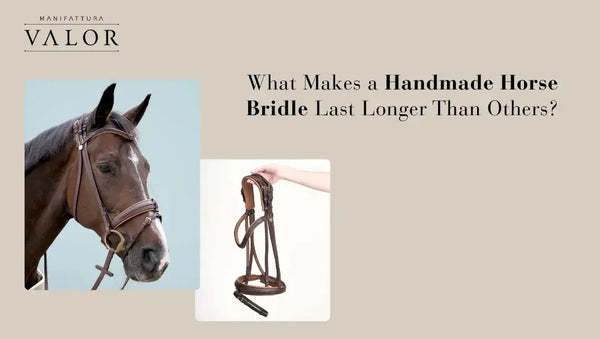
What Makes a Leather Horse Halter Worth Every Penny
Good leather is different because it moves with you instead of fighting against you.
Picked out carefully and manipulated correctly, leather will slowly fit the horse's face just right without losing its shape. Surface in contact becomes softer with use, not coarser.
What makes a difference are the details that are often hidden in construction.
It is the finishing of the edges that determines how the material will get on with the hair. Though the innermost part of a rough edge may be quite insignificant at first sight, it can cause constant friction over a period of time. In the same way, seam stitching and hardware placement decide how pressure is going to be distributed around sensitive areas.
Most of the time, the best leather halters for horses are not the most showy ones. What makes them great is usually proportion, balance, and resistance. Even the smallest details must have a clear purpose, from the leather's thickness to the crownpiece's curvature.
That's where long-term value comes in. It's not beauty alone, but decades of reliable use.
Calf Nappa vs. Synthetic: The Truth Every Horse Owner Must Know
Among natural leathers, calf nappa occupies a distinctive position because of its fibre structure and suppleness.
The leather bends easily around curved anatomical areas without creating the rigid folds often associated with heavier or heavily corrected leathers. Around the poll and cheekpieces, this flexibility allows the material to move more naturally with the horse.
Calf nappa halters usually stay soft and smooth on the surface throughout their entire life. Instead of getting stiff and hard, the leather gets a nice look and still remains flexible.
While synthetic materials make it easier to produce very consistent products, being consistent doesn't always mean being comfortable.
Compared to genuine leather, synthetic materials don't really change their behavior the same way after constant movement, different temperatures, and everyday handling. You may not see the impact right after a short period of time, but most times it's quite clear after prolonged usage.
Because of this, horses that wear the halters for a long time notice these differences gradually day after day.
How Deer Suede Lining Changes Everything for Sensitive Horses
Sensitive horses often reveal details that less reactive horses ignore.
A slight pressure point, a rough edge, or trapped heat beneath a crownpiece may be enough to trigger rubbing or resistance.
This is where lining materials become particularly important.
A deer suede lined halter introduces a softer intermediary layer between leather and coat while maintaining breathability. Unlike many synthetic paddings, deer suede remains naturally responsive to movement and helps reduce friction without creating excessive bulk.
The poll usually reaps most of the advantages in the poll area. This area has very little natural padding and is almost always affected by the movement of the head. A lining fabric that can take up the tiniest movements and still allow air to flow is a good way to help lessen the chances of discomfort during long wearing times.
If you want a horse halter for sensitive horses, comfort will hardly be a result of a mere increase in the thickness of padding. It is the choice of a combination of materials that can mutually reduce friction, concentration of pressure, and heat generation that is the real source of comfort.
The Artisan Difference: Why Handcrafted Beats Mass-Produced Every Time
You only see good quality after a product has been used for a while.
To manufacture large numbers of a product cheaply, the designer is often forced to make compromises on the quality of the final product. At the same time, the choices can be made based on how the material behaves rather than how easily it can be processed during manufacturing.
A craftsperson choosing leather by hand is able to detect different things, like how dense the leather is, where the grains are, and the level of flexibility, which are all things automated processes fail to see. The different parts of the hide behave differently, and a skilled craftsman understands very well in which parts a section will be used best.
Hand-finishing contributes in equally important ways.
Edges can be refined individually. Stitching tension can be adjusted according to the leather being worked. Hardware can be positioned with consideration for anatomical contact points rather than assembly speed.
A handcrafted equestrian halter reflects hundreds of small decisions that are difficult to recognise individually but easy to experience collectively.
This approach also aligns naturally with the principles of sustainable horse tack. Materials are selected for longevity, repairability, and graceful ageing rather than short replacement cycles.
Signs Your Horse's Halter Is Hurting More Than Helping
Discomfort rarely announces itself dramatically.
More often, it appears through patterns.
Pay attention to:
-
Hair loss beneath the crownpiece
-
Coat wear around cheekpieces
-
Recurring rub marks near the noseband
-
Increased sensitivity around the ears
-
Frequent rubbing against fences or stable walls
-
Uneven pressure marks after removal
-
Reluctance during haltering
The cause is not always fit alone.
The stiffness of the material, the moisture that has been trapped, the edges that can cause abrasions, or the pressure that has been focused at a single point are all things that can cause sores in horses. Generally, simply measuring is not enough. Examining the horse and the halter carefully will usually allow you to understand the situation better.
Choosing the Right Horse Halter for Every Occasion
Different environments place different demands on equipment.
For daily stable use, comfort and durability typically take priority. The halter may remain on the horse for extended periods, making breathability and pressure distribution particularly important.
Transport introduces constant vibration and movement. Materials that remain stable while reducing friction become increasingly valuable during longer journeys.
Presentation environments place greater emphasis on visual refinement, but functionality should never disappear behind appearance.
Luxury horse halters that are considered the best often exhibit one major trait - they look as if they are made of the components rather than being just decorative pieces. The perfect combination of top-quality leather, proper size, and exquisite finishing adds to the appearance without being too much.
Combined with a quality leather lead rein for horses, the total effect is derived from unity and skilled workmanship rather than fancy details.
How to Measure Your Horse for a Perfect Custom-Fit Halter
Even exceptional materials perform poorly when fit is compromised.
A custom fit horse halter begins with careful measurement of the poll, noseband, cheek length, and throat area. However, numbers alone are only part of the process.
Attention should also be given to anatomical landmarks.
Buckles should not sit directly against prominent facial structures. The noseband should avoid unnecessary pressure while remaining stable. The crownpiece should distribute contact evenly across the poll rather than concentrating weight in a narrow area.
A correctly fitted halter remains secure without creating restriction. It follows the horse's natural structure instead of forcing the horse to adapt to the equipment.
Where to Buy Luxury Horse Halters That Are Built to Last a Lifetime
Choosing a halter for long-term use should not be based solely on good looks.
Leather should be tested for more than just its softness; one should also consider its strength. The stitching should be regular and intentional. The metal parts should correspond adequately to the weight of the leather. The lining should be made of materials that help the horse's comfort and, at the same time, are not visually disturbing.
Usually, the best professional equestrian leather goods are recognized through these features rather than simply by their brand names.
Manifattura VALOR bases its manufacture on three pillars: natural materials, a good knowledge of the anatomy, and traditional European arts and crafts. Choosing calf nappa leather, deer suede linings, hand finishing performed with great care, and design decisions coming from deep thinking are not mere beautification but are, in fact, functionally aimed at increasing comfort and longevity.
If you are a rider searching for a premium horse halter Germany or worldwide, the simplest and still the most trustworthy sign of a product's good quality is how the items are still performing after having been daily used for years.
A top-quality horse halter is not just resistant. It takes on a character with time, keeps the same functionality, and the horse is continuously supported by the very same quiet trustworthiness that was its hallmark right from the start.