Best Equestrian Equipment for Horses and Riders From Manifattura VALOR

Good tack rarely announces itself during a ride. The horse moves freely through the shoulder, heat dissipates evenly beneath the saddle, leather follows movement without resistance, and pressure remains stable across repeated transitions. Most riders notice poor equipment quickly. Well-made Equestrian Equipment tends to disappear into the work itself.
The differences between the types of materials become more obvious over the years, as they become exposed to factors like sweating, being compressed, the elements, and daily usage. A piece made with wool will return to its original shape differently than a piece made with foam, for example. The type of leather used will affect how long something lasts after it has been used in stable riding conditions.
To most experienced riders, trainers, and owners of riding stables, the way tack performs on a day-to-day basis has more value than how good the tack looks when it is being used.
Material Behaviour Under Repeated Use
The performance of horse riding equipment in Germany is closely tied to how materials respond to pressure and movement.
Dense wool felt continues to hold relevance because of its ability to regulate both temperature and moisture. Wool fibres create small insulating air spaces while still allowing heat and perspiration to disperse away from the horse’s back. During longer rides or repeated schooling sessions, this helps maintain a more stable contact surface beneath the saddle.
When moisture remains trapped beneath synthetic layers, friction gradually increases across the back and shoulder area. Compression patterns become uneven. Hair begins to flatten irregularly along pressure points. Sensitive horses often respond before visible soreness appears through shortened movement, tension during transitions, or resistance through the topline.
This is one reason natural materials remain central within professional equestrian equipment despite the growing use of lightweight synthetic alternatives.
Anatomical Fit and Pressure Distribution
Anatomical design is not simply a shaped outline or softened edge. Effective equestrian gear for horses and riders follows movement pathways without restricting them.
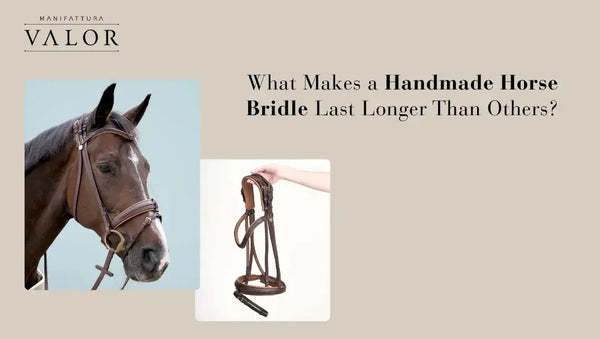
Small construction details influence this more than decorative design elements. A bridle that sits too tightly behind the ears can alter poll pressure. Thick seams beneath saddle panels can interrupt pressure distribution across the back. Breastplates that lack balance through the chest and shoulder may interfere with extension during forward movement.
Well-considered horse tack equipment usually shares several characteristics:
-
balanced pressure across contact surfaces
-
clean edge finishing around sensitive areas
-
leather density that softens gradually without collapsing
-
stitching positioned away from high-friction flex points
-
materials that recover shape after repeated compression
These details matter because horses respond continuously to surface pressure, heat, and restriction during movement. Equipment that remains structurally stable helps maintain more consistent communication between horse and rider.
Why Natural Leather Behaves Differently Over Time
Leather quality becomes more visible after months of use than during initial purchase.
Naturally tanned leather used in high quality horse riding products develops suppleness gradually through handling, warmth, and movement. Flex points soften first while structurally supportive areas retain their shape. Good leather adapts without becoming unstable.
Inferior leather often responds differently under repeated riding conditions. Dryness appears along buckle folds, edges harden unevenly, and the surface begins to crack where movement concentrates tension. In colder weather, poorly treated leather may stiffen noticeably before warming through use.
For riders, this changes tactile communication as much as durability. The feel becomes less consistent when the leather loses suppleness through the hand. Excess rigidity can create unnecessary resistance during finer contact adjustments, particularly in disciplines that depend on subtle rein communication.
When it comes to finding a high-quality equestrian product, look for craftsmanship demonstrated through restraint, such as precision of stitching, balanced selection of hides, and finishing of edges to provide better functionality over time than unnecessary decoration.
Recovery Behaviour and Structural Stability
One of the most important characteristics of the best equestrian equipment is how materials recover after repeated loading.
Every ride creates compression across saddle pads, girths, bridles, and support areas. Materials that flatten permanently or stretch unevenly begin concentrating pressure into smaller zones over time.
Wool felt remains widely respected because its fibre structure maintains resilience under repeated use. Dense felt compresses while still retaining enough recovery to preserve a more stable pressure surface beneath the saddle. This becomes especially important for horses working consistently through conditioning programs, frequent training sessions, or long hours under tack.
Rider gear must also be structurally sound. Consistently maintaining grip and flexibility throughout gloves, reins, and leather contact surfaces will reduce the amount of unnecessary hand fatigue and help create more precise communication while riding for extended periods.
Durability and Quality of Craftsmanship
The craftsmanship of quality riding horse gear is associated with its durability and ability to be repaired.
Hand-finished construction can provide adjustments that are often not feasible in manufacturing processes.
Leather thickness can be balanced more precisely around flex points. Stitching tension can be corrected according to the material behaviour. Wool density and textile structure can be selected with greater consistency across contact surfaces.
Manifattura VALOR understands that wool and leather will behave like they should, after being used for long periods of time for equestrian activity or time spent in a stable.
Their use of wool in equestrian gear is designed with structural integrity, a clear understanding of equine anatomy, and material consistency instead of trend-based production cycles.
This philosophy is particularly applicable to riders who want to utilize equestrian gear over the long-term, rather than discarded each season.
Equestrian Equipment in Germany and European Riding Culture
The demand for carefully constructed equestrian equipment in Germany and across wider European riding communities continues to reflect a strong awareness of material performance.
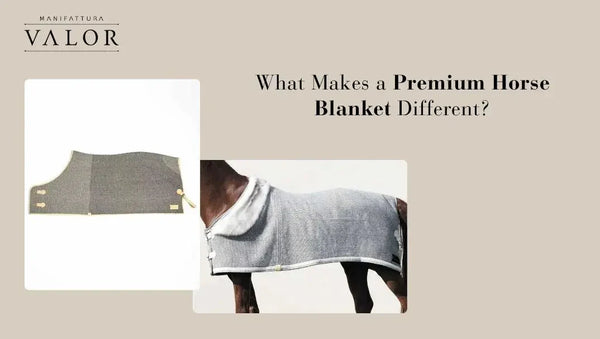
Variable climates place greater demands on tack. Leather must remain stable through humidity and cold exposure. Saddle pads and rugs must regulate heat without trapping moisture during longer stable and riding routines.
In Germany, as far as rideable horse tack materials are concerned, riders tend to put much more emphasis on the durability and anatomical balance of the product as well as the material performance characteristics rather than on the quick replacement of the equipment for aesthetic reasons. Riders also expect that each piece of equipment will function consistently over the course of years of usage rather than just the first time it is used.
This reasoning also helps explain the continued use of wool felt, naturally tanned leather, and repairable construction techniques in traditional European equestrian manufacturing processes.
Choosing Equestrian Accessories With Greater Awareness
Experienced riders often evaluate equestrian accessories through small physical details rather than branding language alone.
The behaviour of materials over time usually reveals more than appearance during purchase:
-
leather that remains supple along flex points
-
wool that recovers after compression
-
stitching that maintains balanced tension
-
hardware that stays stable without excessive weight
-
contact surfaces that reduce friction buildup
Manifattura Valor equestrian equipment supports movement without drawing attention to itself. Pressure remains balanced, materials respond consistently, and the horse works without unnecessary restriction through the back, shoulder, or poll.
That quiet consistency is often what separates well-made tack from equipment designed primarily for short-term appearance.