Why More Riders Are Choosing Wool Saddle Pads for Horse Health

After a demanding training session, the back often tells more truth than the movement itself.
Sweat patterns beneath the saddle become uneven. The coat along the thoracic area feels overly warm long after untacking. Some horses begin shortening through transitions or react subtly while being brushed around the withers. In many cases, the saddle fit has not changed significantly. The material sitting between saddle and horse has.
Heat accumulation, fibre recovery, moisture retention, friction, and pressure stability all influence how comfortably a horse works across repeated sessions. Materials that initially feel soft may compress unevenly after sustained use. Others trap warmth beneath the panels or shift slightly during movement, creating cumulative stress that only becomes visible over time.
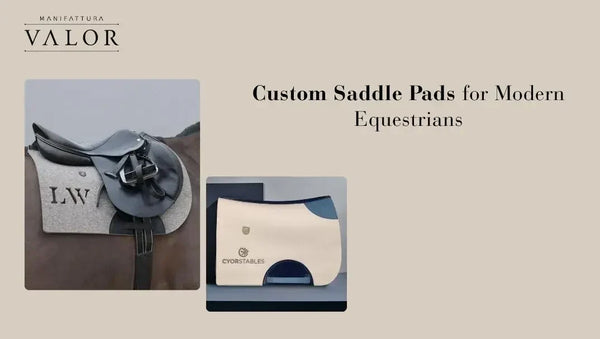
The growing preference for wool Saddle Pads comes largely from this practical observation. Natural wool continues to regulate heat, distribute pressure, and recover structure differently from many synthetic constructions, particularly during consistent daily work.
What Makes Wool Saddle Pads Distinct in Use
Natural wool felt responds dynamically beneath the saddle.
Instead of flattening into a fixed surface under load, dense wool fibres compress and recover continuously through movement. That elasticity matters during collected work, landing impact, lateral movement, and repeated transitions where pressure constantly shifts across the back.
A Saddle pad does not absorb force evenly from one moment to the next. The contact surface changes throughout the ride. Materials that recover slowly or collapse under repeated compression tend to create concentrated loading points near the withers, shoulders, or thoracic spine.
Wool behaves differently because the fibre itself retains resilience.
Properly compacted natural wool saddle pads combine:
- structural density
- airflow
- moisture regulation
- pressure distribution
- dimensional recovery
The balance between softness and stability is particularly important. Extremely soft padding may feel comfortable by hand yet create instability once weight and motion are introduced. Dense wool felt maintains closer contact while still adapting to anatomical contours.
Riders working horses several days consecutively often notice the difference first through consistency. The back remains cooler after work. Sweat distribution appears more even. Sensitivity during grooming becomes less frequent.
Superior Breathability and Temperature Regulation
Heat changes how the entire contact surface behaves beneath the saddle.
As body temperature rises during training, trapped warmth softens the skin and increases friction against the coat. Moisture accumulation beneath synthetic materials can also destabilise the saddle slightly as the session progresses, particularly during intensive flatwork or jumping sequences.
Breathable saddle pads for horses help regulate this environment instead of sealing heat against the horse’s back.
Wool fibres absorb moisture vapour while still allowing airflow through the textile structure. Rather than holding dampness directly against the skin, natural wool continues releasing heat throughout the ride.
In practical riding conditions, this often results in:
- more balanced sweat patterns
- reduced overheating beneath saddle panels
- less surface friction during longer sessions
- greater comfort during seasonal temperature shifts
The best saddle pads for overheating horses are usually not the thickest. They are the ones capable of maintaining airflow while remaining structurally stable once moisture and pressure increase.
This becomes especially noticeable during summer schooling sessions, indoor winter training, or repeated competition rounds where heat accumulation develops progressively rather than immediately.
Preventing Back Problems and Skin Irritation
Minor skin issues rarely appear without warning. Horses usually show small signs long before irritation becomes visible.
Dry patches beneath the saddle area, sensitivity while tightening the girth, shortened movement through the back, or uneven sweat marks often indicate cumulative friction and pressure imbalance rather than a single fitting problem.
This is where horse saddle pad health benefits become measurable over time.
Natural wool creates a more stable interface between saddle and horse because the material remains comparatively temperature balanced and moisture controlled throughout work. The fibre structure also produces less abrasive surface interaction than many synthetic textiles once heat builds beneath the saddle.
For riders using saddle pads for sensitive horses, material behaviour becomes more important than visual thickness.
A pad that shifts slightly during movement can create continuous low-grade friction even if the surface initially feels soft. Properly structured wool felt maintains stability while still adapting to muscular movement across the back.
Many anti allergy saddle pads for horses now rely on natural fibre construction, partly because wool manages moisture and airflow without requiring heavily treated synthetic surfaces.
Over time, horses working in well-balanced natural materials often maintain healthier coat condition beneath the saddle area, particularly during intensive training periods.
Humans somehow created technical fabrics capable of trapping heat against a moving animal and then spent years trying to engineer solutions for the discomfort caused by the original fabric. A magnificent species. Truly committed to complication.
Better Spine and Wither Protection
Good saddle balance depends on stable pressure management underneath it.
Even well-fitted saddles create localised loading during movement. Collection, landing impact, asymmetrical rider balance, and muscular fatigue all change how pressure travels across the thoracic back during work.
Horse back protection saddle pads help stabilize that interaction when the construction supports anatomical clearance without excessive bulk.
Dense wool felt distributes force across a broader contact surface while maintaining enough structural integrity to prevent collapse around the spine and withers. Rather than creating separation through thick padding alone, the material supports closer, more consistent contact.
This becomes particularly relevant for:
- horses with prominent withers
- younger horses changing musculature through training
- collected dressage work
- repetitive jumping impact
- horses recovering from back sensitivity
Riders using saddle pads for dressage and jumping often prefer materials that remain structurally quiet during movement. Excessive shifting beneath the saddle requires muscular compensation from the horse, particularly during technical work where precision and balance matter continuously.
Well-shaped wool construction supports movement without creating unnecessary instability beneath the rider.
Comfort and Performance Across Riding Disciplines
Different riding disciplines expose weaknesses in materials differently.
Dressage work generates prolonged muscular engagement and sustained heat beneath the saddle. Jumping introduces repetitive landing force and rapid pressure changes. Endurance riding tests moisture regulation and fibre recovery over extended periods.
Best saddle pads for horses continue appearing across disciplines because the material adapts effectively to these changing demands without relying on excessive thickness or rigid foam structure.
The advantage is cumulative rather than dramatic.
Horses working comfortably through the back tend to stay more consistent over repeated sessions. Riders often notice fewer subtle resistance patterns, such as:
- hollowing during transitions
- sensitivity after untacking
- shortened stride late in sessions
- tension while saddling
- irregular sweat distribution
Horse comfort saddle pads work best when the horse stops needing to compensate for the material underneath the saddle.
That usually comes from balance rather than softness alone.
Durability and Long-Term Material Behaviour
Many synthetic pads maintain their appearance long after their internal structure has deteriorated.
Wool ages differently.
Dense felt gradually develops suppleness through repeated use while retaining structural resilience if properly maintained. The fibres continue recovering shape under pressure instead of remaining permanently compressed after intensive work.
This is one reason high quality wool saddle pads remain common in serious riding environments where tack is used daily rather than occasionally.
Long-term performance depends heavily on construction quality:
- fibre density
- stitching stability
- edge finishing
- anatomical shaping
- layer balance
- consistency of felt compression
Traditional craftsmanship becomes visible here not through decoration, but through material behaviour after months of sweat exposure, pressure, drying cycles, and continuous movement.
Many riders looking toward horse saddle pads Switzerland, and other European textile makers are responding to this slower, more durable manufacturing philosophy. Materials are expected to improve through use, soften naturally, and maintain structural integrity over years rather than seasons.
Why Riders Continue Returning to Natural Materials
The growing interest in eco friendly saddle pads reflects a broader return toward materials that behave predictably under real equestrian conditions.
Natural wool regulates moisture without synthetic coatings. It adapts to temperature variation. It resists odour accumulation more effectively than many petroleum-based fibres. It retains resilience under repeated compression.
For riders spending daily time around horses, these qualities become practical very quickly.
The continued demand for premium saddle pads Europe is often tied less to branding than to manufacturing approach. Smaller-scale equestrian production still tends to prioritise fibre quality, anatomical understanding, and textile integrity over visual excess or short production cycles.
That distinction becomes obvious through use.
The material settles differently beneath the saddle. Heat dissipates more effectively after work. The structure recovers more consistently between rides. Horses remain more comfortable across repeated training sessions.
Over time, riders usually trust what they can observe directly: movement quality, recovery, coat condition, and stability under saddle. Natural wool continues earning its place there not because it feels traditional, but because its behaviour remains difficult to replace once horses work regularly in it.