How Bridle Fit Affects Horse Behavior

Many times, a horse will form resistance to riding long before it actually shows. The source of this resistance can be the leather of the bridle itself.
If a horse shortens its neck, braces in transitions, or is inconsistent in contact, the horse may not be comfortable with the pressure that the bridle creates on its head. Horses will often compensate for this pressure in silence. Because of the inability to move away from the discomfort caused by the bridle, the horse will exhibit altered positioning, altered distribution of muscle tension, and will alter how it is moving in that area where there is discomfort.
A qualified rider will often have to adjust the fit of their bridle prior to adjusting their use of different bits or upping their horse's workload. The fit of the bridle will be an influence upon the horse far beyond the aesthetics of that fit; the horse's ability to breathe freely or have jaw mobility, the horse's ability to understand the rein movement, the amount of muscle tension displayed, and whether the horse is mentally connected to the rein will all be impacted by the fit of the bridle.
Small inaccuracies repeated daily become physical habits.
Importance of Proper Horse Bridle Fit
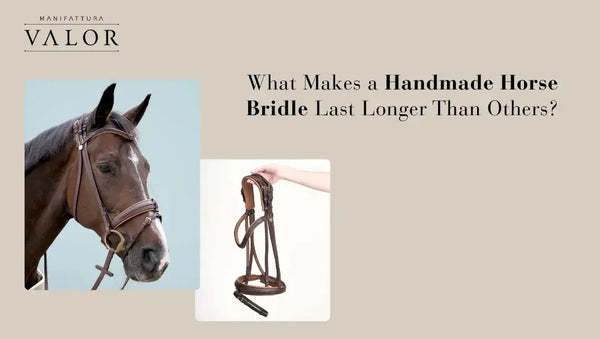
A correctly fitted bridle allows communication to remain stable without becoming restrictive. The horse should feel supported at the poll and mouth, not fixed between pressure points.
This matters because several areas beneath the bridle have very little natural cushioning:
-
the poll behind the ears
-
the facial nerves along the cheek
-
the nasal bone
-
the bars of the mouth
-
the temporomandibular joint
When pressure concentrates unevenly across those areas, horses begin compensating through movement. Some lean heavily into the rider’s hand for stability. Others avoid contact altogether. Neither reaction is necessarily behavioural in origin.
The materials themselves also influence how the bridle behaves over time. Naturally finished leather develops suppleness gradually while maintaining structure. It conforms to the horse’s shape through repeated use instead of remaining rigid across moving surfaces.
That balance matters in long sessions where friction, heat, moisture, and rein tension continue building through repetition. A good horse bridle fit distributes pressure quietly enough that the horse stops noticing the equipment altogether.
Key Parts of a Horse Bridle That Affect Fit
Different parts of the bridle influence the horse in different ways. Problems often come from the interaction between several small fitting issues rather than one obvious mistake.
Poll Area
The crownpiece lies directly atop an area rich in nerves, muscles, ligaments, and other tissue that are located very close to the surface.
If the leather used to make bridles is too stiff, heavily padded, or pulled tightly against the head by an overly tight browband, many horses will respond by tensing their necks and becoming fidgety when having their bridles put on. Some will even develop resistance to flexion in one direction due to uneven pressure distribution.
An anatomically shaped crownpiece helps spread weight across a broader surface area, particularly during collected work, where rein contact stays more consistent.
Noseband
The noseband is important to keep the bridle stable, but should not restrict the jaw in a way that causes problems.
The overtightening of nosebands is one of the biggest issues for all types of riders, both casual and experienced, when it comes to fitting correctly. Even if a horse looks to be behaving while ridden, it may still show signs that indicate there is something wrong.
A correctly fitted bridle will allow the horse's jaw to move freely and comfortably while he swallows with minimal movement of the bridle itself.
Cheekpieces
Uneven cheekpiece length changes how the bit rests inside the mouth. Even a minor imbalance affects rein communication.
This often becomes visible during lateral work. Horses drift through one shoulder, resist bending evenly, or brace against one rein because the bit no longer sits symmetrically across the bars.
Bridle Browband
The bridle browband influences the entire balance of the bridle more than many riders realise.
When a browband is too short, the crownpiece may either drop or be pulled forward, and this can cause discomfort to an equine that is sensitive in its poll area, as this may cause it to pitch its head, hollow its back, or resist downward transition. The correct fit for a browband would be flat without any tension or distortion present within the browband when fitted correctly.
Signs of an Ill-Fitting Bridle
Discomfort rarely appears as one dramatic reaction.
More often, the horse develops repeated behavioural patterns that riders gradually begin accepting as normal.
Common indicators include:
-
inconsistent contact
-
opening the mouth excessively
-
crossing the jaw
-
shortened neck carriage
-
resistance in transitions
-
tail swishing during rein aids
-
rubbing behind the ears
-
uneven sweat patterns beneath padding
-
reluctance during bridling
-
difficulty maintaining straightness
The coat itself often reveals pressure concentration before the horse shows stronger resistance. Flattened hair, heat retention beneath synthetic padding, or dry compressed areas around the poll usually indicate uneven contact surfaces.
In colder climates, stiff leather can become another issue. Bridle leather that loses suppleness in low temperatures often creates sharper edge pressure until it warms through movement. Riders working through winter conditions, including those sourcing a horse bridle in Germany or other colder European regions, tend to notice these changes quickly in daily use.
How Bridle Fit Influences Horse Comfort
Comfort is not simply softness.
A bridle can feel soft in the hand while remaining unstable on the horse. Excess movement creates friction. Excess rigidity creates concentrated pressure. Both eventually influence behaviour.
A well-balanced bridle for a horse remains quiet during movement. The horse does not need to brace against shifting leather or compensate for unstable rein signals.
This becomes particularly important during longer flatwork sessions, jumping courses, or extended hacking, where repetitive movement magnifies small fitting flaws. Heat accumulates beneath the crownpiece. Moisture changes how leather sits against the skin. Compression points become more noticeable as muscles fatigue.
Natural materials generally manage these conditions more effectively because they breathe and recover shape gradually instead of trapping heat against the horse’s skin.
A stable fit supports:
-
freer jaw movement
-
more even rein contact
-
relaxed poll carriage
-
clearer half-halts
-
steadier rhythm through transitions
The horse expends less energy protecting itself from tack pressure and more energy responding to the rider.
Impact of Poor Bridle Fit on Horse Behavior
The connection between horse behavior and bridle fit is often subtle at first.
Some horses become tense before mounting because rein pressure increases while the rider adjusts position. Others become resistant only after twenty or thirty minutes once heat and pressure begin accumulating beneath the crownpiece or noseband.
Bit instability commonly appears as inconsistent contact rather than obvious resistance. Horses seek stability, however they can. Some pull heavily against the rider’s hand. Others retreat behind the vertical to avoid movement inside the mouth.
Over time, these compensations affect muscular development as well. Horses travelling with persistent poll tension frequently become rigid through the underside of the neck while losing elasticity across the topline.
Many riders attempt to solve these problems through stronger bits or training adjustments when the issue begins with the horse tack bridle itself.
Correct Bridle Fitting Techniques
A reliable bridle fitting guide begins with observation before adjustment.
The horse should be assessed both standing and moving because some pressure problems only appear during rein contact or flexion.
Several principles remain consistent:
-
the browband should sit flat without pulling forward
-
the noseband should allow natural chewing and swallowing
-
cheekpieces should remain even on both sides
-
the throatlatch should stabilise without restricting flexion
-
the bit should rest quietly without excessive wrinkles or instability
Fit should also be reassessed regularly. Leather changes through use. Padding compresses. Horses gain or lose muscle seasonally depending on workload and conditioning.
Comfortable horse bridle adjustment is never entirely static.
Bit Position and Its Effect on Behavior
The bit position horse bridle setup influences how pressure travels across the tongue, bars, and corners of the mouth.
A bit positioned too high often creates constant lip tension and restricted chewing. Too low, and the bit becomes unstable during rein aids, knocking against sensitive areas inside the mouth.
Some horses react by opening their mouths repeatedly. Others lean heavily against the hand because instability feels harder to predict than fixed pressure.
Tongue shape and palate height also matter. Horses with lower palates may become uncomfortable in bits that rotate upward too sharply during contact. Narrow bars can increase sensitivity even with mild mouthpieces.
Saliva production often provides useful feedback. A relaxed mouth usually produces consistent moisture and quieter chewing patterns. Excessive dryness or agitation often signals instability or pressure concentration.
A properly fitted horse riding bridle kit will help you to feel precise rein aids rather than being disruptive because the bit remains quiet when the bridle is fitted correctly.
Choosing the Right Bridle Size for Your Horse
Bridle size for horses is more than just the overall length of the head.
The fit of a bridle is impacted by variables such as a wider forehead on a horse, a narrower jaw, an asymmetrical structure of the horse's face, varying widths of a horse's poll bone, and other characteristics.
An example of different horses needing to be fitted properly for bridles will be a warm-blood horse may require a larger brow band than a similar fitted horse, but warm-blood horses will usually not require an oversized nose band, because of their shorter head in comparison to other-sized horses with finer heads, which will require more bulk to be placed below the crown piece.
The importance of craftsmanship comes into play in this area so that all of the proportions are correct throughout the complete bridle and not just a larger version of each item.
The same principles apply across disciplines. A dressage setup and a western horse bridle differ in structure and rein function, but both still depend on even pressure distribution and stable anatomical fit.
A correct bridle fit horse approach always prioritises how the horse moves and responds rather than how the bridle appears from the ground.
Common Bridle Fitting Mistakes to Avoid
Many fitting problems come from overcorrection.
Riders often tighten nosebands for visual stillness or choose heavily padded designs that increase heat and bulk around sensitive areas. Browbands are frequently left too short. Leather becomes dry and rigid through inconsistent care.
Another common mistake is evaluating fit only while the horse stands quietly in the stable. Some problems appear only during movement, particularly in transitions or collected work where rein tension changes more frequently.
From time to time, experienced riders will continue to modify their riding tack to fit their horse rather than make sure the tack fits their horse correctly.
The correct bridle fitting will happen in such a way that the horse will be comfortable and relaxed in his contact with his rider and won’t be lengthy in the neck or resist rein cues from his rider. Movement remains more even, breathing stays quieter, and transitions require less correction.
Those small changes usually reveal more about fit than the bridle itself ever will.