Stop Buying the Wrong Size: Horse Rug Fit Guide

A horse may wear the correct insulation for the weather and still finish the day with rubbed shoulders, a flattened mane, or heat trapped beneath the fabric. Those problems are usually signs of fit rather than warmth. Every stride changes the relationship between textile and body. A rug that remains balanced while the horse grazes, rolls, stretches, and travels across uneven ground protects not only from the weather but also from unnecessary friction.
Choosing horse rugs, therefore, begins with anatomy rather than grams of filling. Materials, cut, and construction all matter, but only when they work with the horse's natural movement instead of resisting it.
Why Horse Rug Fit Matters More Than Weight
Weight determines insulation. Fit determines how consistently that insulation stays where it is meant to.
The shoulder rotates through a wide range with every stride, while the withers rise and settle as the back works. A rug that pulls backwards during those movements gradually concentrates pressure at the neckline and shoulder instead of distributing it across the body.
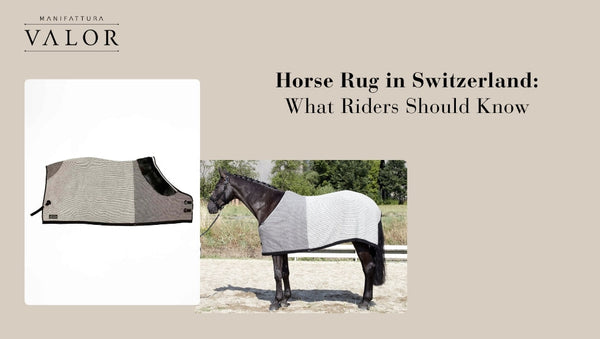
This is where a carefully developed horse rug pattern becomes more important than additional fastening points. Balanced darts, correctly positioned chest closures, and an anatomically shaped neckline allow the textile to recover after movement rather than creeping backwards over time.
Material behaviour also influences fit. Wool fibres compress under pressure, then recover much of their loft once the load is removed. That resilience helps maintain a stable contact surface instead of creating hard pressure lines as the horse moves. Combined with good pattern cutting, natural fibres contribute to lasting equine comfort and protection without relying on excessive bulk.
7 Signs Your Horse Rug Doesn't Fit Properly
Poor fit usually announces itself long before visible damage appears.
Watch for these signs:
-
Hair begins to break or thin at the shoulders or withers.
-
Smooth pressure marks that remain after the rug is removed.
-
Chest buckles constantly sitting under strain.
-
The rug drifts consistently to one side.
-
The neckline pulls backwards as the horse lowers its head.
-
Uneven heat or moisture beneath isolated sections of the rug.
-
The rear of the rug lifts during normal movement.
The first signs usually show up where the shoulder blade moves underneath the material. Whenever the carpet keeps moving every time you take a step instead of returning to its original position, the friction that occurs repeatedly will result in hair loss.
How to Measure Your Horse for the Right Rug Size
Precision of measurements should take place even before evaluating size tables. One should take a flexible measuring tape and start from the middle of the chest in a circular fashion, taking measurements around the widest point of the shoulder and down to where the tail starts while ensuring the tape is against the body rather than held in the air.
This measurement should only serve as a guide and not as a final measurement, as two horses with the same measurement might still fit differently because of such factors as the angle of the shoulder, withers’ height, chest depth, and position of the neck.
This is why experienced equine blanket fitting always considers both dimensions and conformation. The tape measures the length. Movement confirms whether the pattern actually suits the horse.
How to Check Horse Rug Fit After Purchase
The first assessment happens when the horse is standing. The more useful one happens after movement.
Allow the horse to walk, turn, and lower its head naturally before checking the rug again. A well-balanced rug should return to the same position rather than gradually shifting backwards or twisting around the barrel.
Check that the neckline sits comfortably without pressing into the base of the neck, and that the chest closure holds the rug in position without carrying excessive tension. Then remove the rug and inspect the coat. Smooth hair and even warmth usually indicate balanced pressure, while flattened patches or concentrated heat reveal where the fabric is working against the horse rather than with it.
Rug Fitting Mistakes That Cause Rubbing and Hair Loss
Many rubbing problems begin with small fitting adjustments intended to solve another issue.
Over-tightening chest fastenings may reduce visible movement but increase pressure where the shoulder rotates. Choosing a longer rug for additional coverage often shifts the balance rearwards, encouraging the neckline to pull across the withers.
Layering deserves equal attention. A lightweight turnout placed beneath another rug changes how the outer layer settles, particularly when the two textiles recover differently after repeated movement.
Construction matters here as much as material. Fabrics with good recovery maintain a more consistent contact surface throughout the day, reducing the small shifts that gradually wear away the coat.
Turnout vs Stable Rugs: Key Fit Differences
A waterproof turnout rug must remain balanced through continuous movement outdoors. Walking over uneven ground, rolling, grazing, and changing direction all place repeated stress on the shoulders and chest, making freedom of movement essential.
In comparison, breathable stable rugs are used longer on horses at rest, as moisture management, temperature control, and even pressure are more crucial than in outdoor environments. Because the horse moves less indoors, the rug can be nearer to the horse's body without creating discomfort, as long as the cut of the blanket suits the horse's natural stance.
Neither design is inherently better. Each responds to a different pattern of movement and environment.
Choosing Rugs for Different Horse Body Types
Length alone rarely determines the correct fit.
A high-withered sport horse often benefits from additional clearance along the topline, allowing the rug to settle without concentrating pressure at the withers. Broader horses typically require more room through the shoulder and chest so the fabric can rotate with the forelimb rather than resisting it.
Deep-bodied horses may need greater side drop for stability, while finer-built horses can become unstable inside cuts designed for heavier frames.
A full neck horse rug should complement the horse's natural outline rather than compensate for an unsuitable body fit. If tension develops where the neck joins the shoulder, changing the cut usually achieves more than changing the style.
How to Prevent Shoulder Rubs and Pressure Points
Shoulder rubs rarely result from a single point of contact. They develop through thousands of small movements that repeatedly shift the same area of fabric across the coat.
Reducing that movement depends on several factors working together:
-
An anatomically balanced pattern.
-
Even pressure distribution across the contact surface.
-
Textiles that recover after compression instead of remaining flattened.
-
Breathable construction that limits heat and moisture build-up.
Such principles can be perceived in the case of quality anatomical fit horse blankets in which the shaping process starts with the design instead of adding elastic insertions to rectify any disproportion afterwards.
Choice of materials matters too. Wool felt is good at moisture control and keeps its structural integrity despite different compressions. It tends to soften while being used, which also makes it ideal for bespoke wool horse covers and other sustainable wool equestrian equipment.
This logic can be applied to the other horse riding clothes, where the principle behind excellent freedom of motion comes from the construction, not mere elasticity.
When to Replace a Horse Rug Instead of Repairing It
A damaged buckle or torn strap can often be repaired without affecting performance.
Structural balance is different. Once repeated repairs alter how the rug hangs across the back, waterproof layers begin separating, padding remains permanently compressed, or the original shape no longer returns after cleaning, the rug has lost more than its appearance.
Textiles age much like naturally tanned leather develops patina. Surface character changes over time, but structural integrity should remain. When that balance is gone, further repairs rarely restore how the rug behaves in motion.
Well-made horse rugs are designed to maintain their shape through years of use because fit is built into the pattern, the materials, and the construction from the beginning. When those three elements continue working together, the rug settles quietly into place, allowing the horse to move without the equipment constantly asking to be noticed.