When Should You Use Horse Rugs? Seasonal Horse Rug Guide

A horse standing dry in still winter air may need very little additional covering. The same horse, clipped after regular work and turned out into wet wind, can lose heat quickly through the back and shoulders before the coat has time to recover. Rugging decisions rarely depend on temperature alone.
Moisture changes everything. So does workload, coat condition, recovery time, stable ventilation, and how the rug settles across the horse in motion. A rug that shifts through the shoulder or traps damp heat beneath the chest will usually show signs before the horse does. Flattened coat texture, warm patches behind the elbows, rubbing near the withers, or tension during grooming often appear first.
Good horse rugs support the horse’s own thermoregulation instead of overriding it. That depends as much on cut, textile structure, and breathability as insulation itself.
What Is a Horse Rug and Its Purpose
A horse rug creates a controlled layer between the horse and external conditions. Depending on the material and construction, it may preserve warmth, protect against prolonged rain exposure, assist post-work recovery, or reduce heat loss during turnout.
The material determines how the rug behaves over time. Dense synthetic layers often hold heat effectively but can also trap condensation close to the skin during fluctuating weather. Natural fibres behave differently. Wool, for example, retains warmth while still allowing moisture to disperse gradually through the textile instead of collecting beneath it.
Construction matters just as much as insulation.
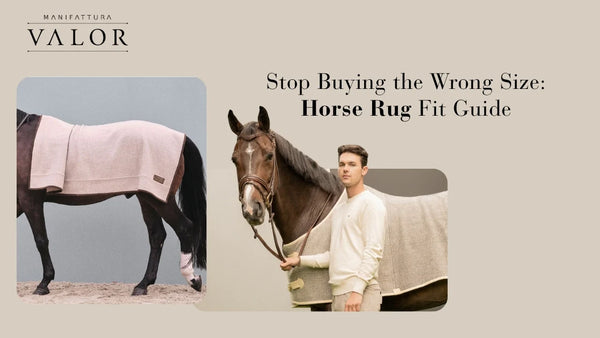
A poorly balanced rug tends to pull backward across the shoulders during movement, concentrating pressure at the withers and restricting freedom through the scapula. Over time, this creates rubbing, compressed hair, and muscular sensitivity along the topline. A more anatomically considered cut distributes weight more evenly across the contact surface and remains stable during turnout and rest.
Why Horses Need Rugs in Different Seasons
Horses adapt remarkably well to cold when the coat remains dry and lofted. Rain and wind are usually more disruptive than the low temperature itself.
Once moisture compresses the coat, the insulating air between the hairs disappears. Cold air reaches the skin much faster along the back, flanks, and hindquarters. This is often where horses begin tightening through the body before riders notice obvious discomfort.
Seasonal rugging is therefore less about keeping the horse warm at all times and more about avoiding unnecessary heat loss or heat retention under changing conditions.
Rugging too heavily is bad for your horse. During moderate temperatures, horses wearing heavy rugs may sweat underneath the rug, which will lead to a softening of the coat, create points of friction on the shoulder area, and create uneven heat distribution across the front of the horse's chest. More commonly than many riders believe, transitional seasons provide outside conditions where horses are susceptible to overheating.
When Horse Rugs Are Used In Winter - Winter Horse Rugs and Cold Weather Management
Horse rugs are used in the winter when the natural function of the horse's coat becomes inadequate for how much work is expected from the horse for their age, clipping status, and the conditions they will be turned out into.
Clipped horses have lost much of the coat structure that traps warm air close to their skin, and older horses can also have difficulty maintaining their body temperature very efficiently if they are out in wet conditions for prolonged periods of time or after exercise has been completed.
Therefore, in those types of situations, insulation alone will not be enough - moisture management also becomes as critical as insulation.
Wool fabrics act as a continuing source of insulation, even as they absorb small amounts of moisture, which is why wool continues to be used for winter.
Wool fabrics also drape better across the horse's back and shoulders without becoming stiff when it is cold.
When examining the turnout conditions, riders with sufficient experience consider:
-
wind exposure
-
coat condition
-
shelter availability
-
duration of turnout
-
recovery after exercise
-
stable humidity at night
Heavy rugs are not automatically more effective. Horses that feel damp beneath the shoulders or chest are often carrying too much insulation for the conditions. Once moisture accumulates beneath the rug, thermal efficiency starts dropping.
Turnout rugs for horses also need structural stability. Neck openings that sit too low or chest closures that pull unevenly tend to create pressure during movement, especially across the point of the shoulder.
When to Use Horse Rugs in Summer
Summer rugging serves a different purpose entirely.
Most summer horse rugs are used for fly protection, transport, UV exposure, or cooling management after work. Breathability becomes the priority here. A lightweight rug that restricts airflow can raise skin temperature surprisingly quickly, particularly during humid weather.
After exercise or bathing, some horses benefit from a light moisture-wicking layer while body heat settles gradually. Direct exposure to cool evening air immediately after work can leave the back and hindquarter muscles tight the following day, especially in horses working consistently.
In hot conditions, rugs are usually best kept minimal unless there is a clear functional reason for using one:
-
insect protection
-
travel
-
post-work drying
-
skin sensitivity management
Persistent sweating beneath a summer rug nearly always indicates insufficient airflow or excessive layering.
When to Use Horse Rugs in Rainy and Wet Conditions
Rain alters the entire behaviour of the coat.
A wet outer coat loses much of its natural insulating structure. Once flattened, it no longer traps warm air effectively, particularly during wind exposure or prolonged turnout.
Waterproof horse rugs help preserve that insulating layer before saturation reaches the skin. The quality of the outer textile matters here. Lower-grade waterproof coatings often become stiff after repeated wet-dry cycles, especially along the spine and shoulder folds. Once flexibility disappears, movement restriction and friction usually follow.
Breathability remains essential even in wet weather. Waterproof horse rugs that fail to release internal moisture often leave the horse damp from condensation rather than rain itself.
Stable rugs for horses work differently because stable environments create different demands. Indoors, airflow, moisture release, and recovery tend to matter more than waterproof protection.
Rugging Guidelines for Spring and Autumn
Spring and autumn usually require the most adjustment.
Cold mornings followed by warm afternoons can leave horses overdressed for several hours at a time. During seasonal coat change, this becomes particularly noticeable around the shoulders and chest where excess heat accumulates first.
Lighter layering systems generally work better than relying on one heavy rug throughout the day.
Useful signs to monitor include:
-
warmth trapped behind the elbows
-
dampness beneath the chest
-
flattened coat texture
-
rubbing near the shoulders
-
unusual restlessness during grooming
These small physical changes often reveal more than the outside temperature alone.
Choosing the Right Rug Weight for Each Season
Rug weight should reflect the horse’s actual thermal demand rather than the season printed on the label.
A lightweight rug may be completely sufficient for an active horse living outdoors with shelter access. Meanwhile, an older clipped horse standing indoors overnight may require greater insulation despite milder temperatures.
Material structure also affects how a rug performs. Dense wool and felt-based textiles often regulate warmth with less bulk because they continue allowing airflow through the fibre structure itself. Synthetic fill can provide substantial insulation, but once moisture becomes trapped internally, the environment beneath the rug changes quickly.
The best horse rugs for weather changes tend to balance:
-
thermal stability
-
breathability
-
freedom through the shoulder
-
moisture release
-
structural resilience over repeated use
Factors That Affect Rugging Decisions
No two horses regulate heat identically.
Age, workload, breed type, coat density, recovery rate, and body condition all influence rugging decisions. Horses in regular work generate and release heat differently from lightly exercised horses. Fine-coated breeds often respond differently to damp cold than native types with heavier natural insulation.
Regional climate also matters. Horse rugs in Germany or Northern Europe are often selected with prolonged damp exposure in mind rather than dry cold alone. Persistent moisture changes how both coat and textile behave over long periods.
Daily observation remains more reliable than rigid seasonal rules.
Signs Your Horse Needs or Doesn’t Need a Rug
A horse needing additional coverage may show:
-
muscular tightness along the back
-
delayed drying after exercise
-
visible weight loss during colder periods
-
cold ears combined with body tension
-
reluctance to relax during turnout
Meanwhile, horses wearing too much insulation often develop:
-
sweating behind the shoulders
-
damp patches beneath the chest
-
flattened coat texture
-
rubbing at pressure points
-
agitation while being rugged or groomed
The way that horses typically respond to rugs predates their adoption as part of their 'stable routine,' which is also untrue; humans like to operate under a false premise that every horse should be fitted the same way on a simple chart of sizes!
Some Mistakes That You May Want To Avoid When Using Rugs On Your Horse.
One of the more common mistakes when rugging is keeping to the same paddock whilst the seasons or other environmental changes continue to change.
Weather, workload, coat growth, recovery, and turnout exposure change constantly through the season. Rugging needs to adjust with them.
Other common problems include:
-
leaving damp rugs on for extended periods
-
using waterproof layers with poor breathability
-
over-rugging during transitional weather
-
ignoring shoulder restriction and pressure distribution
-
choosing rugs based only on fill weight
A thoughtful horse rug buying guide considers how the material behaves after months of use, not only when new. Textile recovery, stitching stability, fastening balance, and suppleness through repeated movement all affect long-term equine comfort.
Well-made horse rugs eventually become almost unnoticeable in use. The horse moves freely, the coat remains stable underneath, and the material settles into work without constant adjustment, which is considerably less dramatic than marketing language prefers, but far more useful inside an actual stable.