Horse Rug in Switzerland: What Riders Should Know

If you are an equestrian from jura hills, and you have 3 horses. One fine day you got 3 different horse rugs online. All from different brands, different patterns, colours. With that something else differed too. The quality.
Jura hills can fail entirely two hundred metres higher up, on the same day, in the same weather system. That's the part most buying guides skip: Switzerland doesn't have one winter, it has several, often within a single valley.
A horse turned out at pasture in the morning mist and left through an afternoon thaw is dealing with more moisture and temperature variation than most rugs are actually built to handle. Choosing a horse rug in Switzerland starts with understanding that variability, not with picking the warmest option on the shelf.
Why Swiss Weather Matters When Choosing a Horse Rug
Switzerland has diverse climates and as such a horse located nearby Lake Geneva can enjoy wet, warm winters whereas the one stabled above 1,000 meters needs to endure cold, dry weather with heavy snowing and rapid thawing. This is exactly why when it comes to its horse rugs for Swiss weather needs to account for both moisture and temperature management at the same time. The rug that does great in cold, dry weather can still capture the condensation as soon as humidity goes up and the damp horse will be losing its body heat faster than one that is exposed to a natural environment.
What Type of Horse Rug Is Suitable for Switzerland?
The majority of competent owners will rotate between at least two or three rug weights instead of depending on a single universal rug. This illustrates the way horses regulate their temperature: via movement and airflow in the skin instead of merely being covered in a rigid material. The appropriate horse wardrobe usually consists of:
-
A lighter transitional layer for autumn and spring, when temperatures swing 10–15°C within a day
-
A mid-weight option for stabled horses in moderate cold
-
A structured winter horse rugs with denser fill for sustained sub-zero turnout
The goal is matching the rug to the horse's actual thermoregulation, not defaulting to the heaviest available option, over-rugging causes sweating under the shoulder and along the spine, which is its own welfare issue.
How Rain, Snow and Humidity Affect Rug Selection
Rain and wet snow test a rug's outer construction more than its fill. Waterproof horse rugs rely on tightly woven or coated outer fabrics with taped or overlapped seams; the seams, not the fabric surface, are usually where water actually gets through. Snow adds a second variable: compacted snow sitting on the withers and croup can melt from body heat, soak inward, then refreeze against the coat overnight if the outer layer isn't managing runoff properly. Horse rugs for rain and horse rugs for snow therefore need different surface behavior, rain calls for smooth water shedding, while snow calls for a surface that doesn't hold moisture against the horse as it melts.
Horse Rug Materials: Wool, Synthetic and Blended Fabrics
At this point, material choice becomes more about comfort and less about style. Synthetic insulation is light and dries quickly, which is ideal for horses in wet, moderate climates. Wool, however, acts differently: wool fibres have a wavy shape which creates air pockets in them rather than flattening. This allows wool to keep insulating even when wet, something synthetic insulation isn’t able to do.
Wool horse rugs, particularly those built with wool felt linings against the contact surface, also wick moisture away from the skin rather than holding it there, which matters enormously for a horse standing still for hours in a field shelter. Blended fabrics attempt a middle position, but the trade-off is usually a loss of the specific properties that made either material useful in the first place, synthetic durability sacrificed for a wool feel that isn't structurally wool, or vice versa.
Choosing Horse Rugs for Swiss Winter and Transitional Seasons
Horse rugs for winter in Switzerland should be suitable for the extreme cold weather as well as the freeze-thaw cycles that happen typically at higher altitudes. Blankets that recover well in thickness means the fill can regain its shape even after, after being compressed by lying or rolling, work well in maintaining consistent insulation across the winter as opposed to having thinned down by February.
Compared to rugs for transitional seasons focus more on being breathable and quick drying than on providing the highest warmth, as the main problem in warm days of October or April is overheating rather than getting cold.
Why Breathability and Moisture Management Matter
Even though a horse is covered with a blanket, it still creates heat and humidity by metabolic processes. The breathable horse rugs help the humidity to escape from the blanket without forming major droplets on the horse's hide. Wool felt achieves that without effort through its fiber structure, meaning that its breathability is retained, while that of some synthetic ones decreases significantly after a few wet-dry cycles.
Over a season, this difference shows up as coat and skin condition, horses in poorly ventilated rugs are more prone to rubbing, dullness along the rug line, and localised sweating that a rider only notices when removing the rug at the end of the day.
What Should Riders Check Before Buying a Horse Rug?
Before buying equestrian rugs Switzerland's climate actually demands, it's worth checking construction details rather than marketing copy:
-
Seam placement over the shoulder and wither, where friction is highest during movement
-
Fill loft and recovery after compression
-
Contact-surface material against the coat, not just the outer shell
-
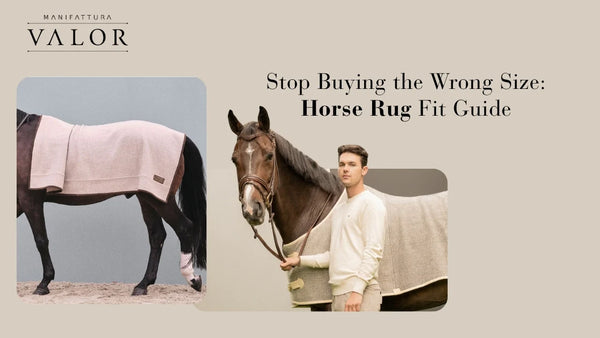
Fit through the shoulder and hindquarter, since a rug that shifts during movement causes rubbing regardless of material quality
The effectiveness of a horse rug for cold weather comes down to how well it fits. No matter how high quality wool horse rugs might be, it won’t keep your horse warm if it restricts movement in the shoulders or leaves gaps in the chest or belly area.
Equestrians searching for premium horse rugs are often, in practice, looking for exactly this construction that respects how a horse moves, not additional decoration. Choosing well means understanding the animal underneath the rug as much as the fabric itself: how it stands, how it moves, and how it sweats and dries through a Swiss season that rarely holds still for long.