Dog Home Accessories That Create a More Comfortable Space

A dog that spends the day moving between the stable yard, garden, car and house experiences several changes in surface, temperature and activity. The quality of the resting place becomes noticeable precisely when the dog stops moving.
A suitable bed or blanket is not simply a soft surface. It affects how the body settles, how heat is retained or released, and whether the dog can change position without resistance. For owners accustomed to assessing saddle pads, rugs and other equestrian equipment through material behaviour, the same principles apply at home.
The Role of a Comfortable Resting Space in a Dog's Routine
Resting is not a single posture. Dogs curl tightly, stretch onto their sides, change position and sometimes move between warmer and cooler areas of the room. A useful dog resting space therefore needs enough surface area for natural movement rather than forcing the body into one position.
Location matters as well. A resting area placed directly beside a busy doorway may offer a comfortable surface but little opportunity for uninterrupted rest. Equally, a corner with poor airflow can become unnecessarily warm.
It is very important for older pets or pets that are mobility impaired to have easy access. According to advice by veterinary professionals, it is ideal to have bedding that is readily accessible so that the dogs do not have to go through difficult climbing. The right kind of support will distribute the weight of the dog properly.
The objective of dog home comfort is therefore not maximum softness. It is an appropriate relationship between support, surface, temperature and accessibility.
Dog Beds and Their Importance for Everyday Rest
A comfortable dog bed should respond to the way the dog actually rests. Size, density and construction all influence the contact surface beneath the body.
A bed that is too small can restrict stretching. One that compresses excessively may offer little structural support. For a larger or older dog, a stable base can be more useful than excessive cushioning.
The same thinking applies when choosing a dog bed for home. Consider where the bed will be used, how often the dog moves in and out of it, and whether the material can withstand repeated compression.
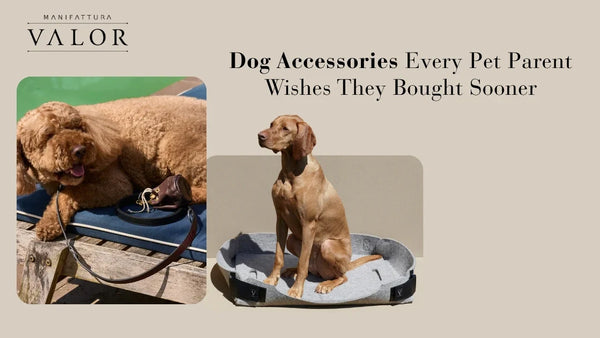
Manifattura VALOR's approach reflects this material-first perspective. Its rollable TESORO bed uses approximately 8 mm of pure new wool felt. The felt is described as breathable, insulating, shock-absorbing and thermo-managing, while also helping to reduce the effect of cold surfaces beneath the dog.
That behaviour is quite different from simply adding more padding.
How Blankets Can Add Warmth and Familiarity at Home
Dog blankets can alter a resting surface without replacing the bed beneath it. They provide an additional layer when temperatures fall and can also create a familiar texture that the dog associates with a particular resting area.
The wool dog blanket is very intriguing for one reason: wool does more than insulating. The fibre structure of the wool is optimized in solving moisture vapour and maintaining the body heat to ensure a stable micro climate around the body. The Manifattura VALOR sure virgin wool web fabrics are produced with the aim for good breathing, moisture or body heat management.
The blanket should still be proportionate to the dog and its habits. Overly heavy or poorly breathable coverings can become uncomfortable, particularly for dogs that tend to burrow beneath them.
Natural Materials for a More Comfortable Dog Living Space
Material choice becomes more meaningful when considered through use rather than appearance.
Natural wool has a combination of softness, resilience, insulation and breathability that makes it suitable for resting textiles. Felt adds density and structure without requiring synthetic padding. Manifattura VALOR's wool felt is traditionally produced using machinery more than a century old and is made without synthetic additives.
A natural wool dog bed can therefore offer a different type of surface behaviour from heavily coated synthetic bedding. Wool also has antistatic and odour-regulating properties in some VALOR dog-bed constructions.
Still, natural fibres require maintenance: Wool needs moisture and heat, that means any damp bedding should be dried properly and stored in a well-ventilated dry space. With proper care and maintenance, the fibre's, natural properties, and structure can be maintained.
Temperature, Breathability and Comfort in Dog Home Accessories
Temperature should be considered alongside activity.
A dog returning from a long walk may need to release accumulated heat, while the same dog may seek insulation later when lying still. This is why breathable dog-friendly home accessories can be more useful than materials designed simply to trap warmth.
Dogs also regulate heat differently from humans. Panting is their primary method of releasing excess heat, while their coat already provides substantial insulation.
The practical implication is simple: a resting surface should not prevent the dog from finding its own comfortable temperature. In warmer conditions, some dogs will deliberately leave a padded bed for cool flooring.
Creating a Dedicated Dog Space Without Disrupting Your Interior
A dedicated dog living space does not need to look separate from the room around it.
This is where considered dog accessories for home become useful. A restrained bed, wool mat or blanket can define a resting area without introducing excessive visual contrast or unnecessary furniture.
Materials with natural texture tend to sit comfortably alongside timber, stone, leather and woven textiles. The Castello Mio dog and cat cave, for example, combines oak, pure new merino wool felt and naturally tanned calf leather, demonstrating how functional animal spaces can be constructed with materials already familiar within considered interiors.
The aim is not to conceal the dog's presence. It is to give its equipment a clear place within the home.
Choosing Dog Home Accessories for Long-Term Everyday Use
The most useful dog home accessories are those that remain functional after repeated contact with paws, claws, hair, moisture and compression.
When assessing natural dog accessories, look beyond the surface:
-
Material recovery: could the textile be recovered from compression after several uses?
-
Breathability: Is heat and moisture able to be transported away from the contact surface?
-
Construction: Are the seams, edges, and attachment points intended for re-use?
-
Maintenance: is a method of cleaning and drying the material available that will not alter the properties of the material?
-
Ageing: is the effect to make the material more characterful by use or just to wear it out?
In the same way, variations that use the search terms luxury dog home accessories and premium dog home accessories are not most of all helpful when it is time to look at the construction in question; the real differences lie in the quality of the fibre, its density, hand-finishing, the construction itself and the way the material performs after prolonged use.
A well-made resting piece should become familiar rather than disposable. Wool can soften visually while retaining useful structure; naturally tanned leather can develop patina while remaining supple and functional.
For a home shared with dogs, comfort is ultimately built through these small physical decisions. The right surface, the right degree of insulation and the right construction allow a resting place to work quietly in the background, through changing seasons and everyday routines.