What Makes a Premium Horse Blanket Different?

When you walk into a stable after a night of freezing cold and wet weather, you may notice something that might not seem obvious at first. Two horses may have the same blankets, but one horse doesn't get wet, is relaxed, and can move freely, while the other has a wet coat, has marks on the shoulders, or has a badly positioned rug. These differences are not coincidental but are the consequences of how the materials work, how the design of the blankets differs, and how well the blankets communicate with the anatomy of the horses after a long time of being used.
For those riders and stable managers who have spent enough time around horses, the differences become obvious and important as a blanket is no longer evaluated based on its appearance but rather on frequency of usage over the months of riding, turnout, and stable practices.
Why Quality Matters When Choosing a Horse Blanket
An effective horse blanket does much more than keep the animal warm; it assists in the horse’s natural movements, helps in maintaining its body temperature, and protects its coat from external changes and activities. It is important to remember that horses perform all kinds of motions in a horse blanket - every step, stretch, roll, or eating movement puts a certain pressure on the blanket. If the design of the blanket is improper or the material of the blanket is poor, the pressure is felt as withers or rubs on the shoulder, pressure points on the withers, shifting of the blanket, or moisture underneath it.
These issues don’t appear overnight, and they start showing up only when the blanket is used repeatedly - the types of fabric compress, the stitching wears out, and the blanket loses its shape.
When designing an equestrian horse blanket, special attention is paid to performance in the long run.
The Materials That Set Horse Blanket Construction Apart
The look and style of blankets is determined by the material used to produce them, but other aspects also have a role to play. In particular, the material will be important for the blanket construction and its other properties, including breathability, insulation, absorption, durability, etc.
Natural fibers still have significance in horse equipment because they regulate temperature. For instance, wool can trap moisture in its fiber, but вits characteristics make it dry and protect the coat from getting wet. Thus, wool makes it possible for moisture to escape easily.
The properties of fiber influence the load distribution. The fact that wool felt can regain its original shape after being pressed many times can provide an even distribution of pressure.
Leather should also be noted. When being processed using natural tanning techniques, leather becomes more flexible when used, but it still keeps its shape. Instead of breaking, leather becomes patinated with time.
All the above-mentioned points help to comprehend why a luxury horse blanket can remain effective much longer than a blanket made from lower-grade materials.
How the Right Fit Enhances Comfort and Performance
Quality fabrics will not make a difference if the design is wrong.
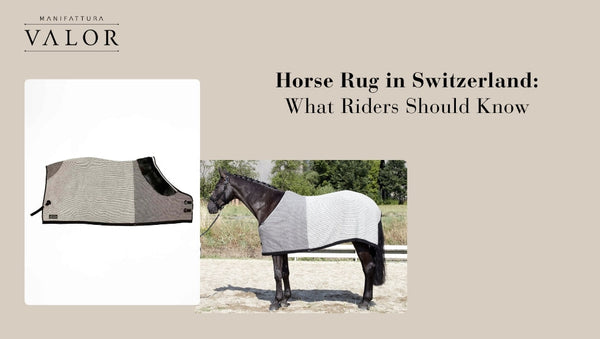
Your blanket should conform to the natural structure of the horse, without tightness in the chest or pressure on the shoulders. A blanket should accompany the horse during movement; that is, it should follow it instead of opposing it.
An anatomical fit contributes to comfort in different ways:
-
The pressure on the withers and the shoulder is reduced
-
The horse has no limits to moving its shoulders
-
There is no excessive friction
-
The coverage is uniform on the back and hindquarters
-
There is no balance loss when the horse is turned out
These points are necessary for keeping the horse rug in its place because its figure corresponds with the horse anatomy instead of being kept by the tightly fitted straps.
This is extremely important for a turnout horse blanket, which will be used for a long time.
Premium Features Every Rider Should Look For
It is often true that the most important factors are those that are out of sight. Instead of focusing much on the hardware or outer decorations, experienced horse riders take note of the quality of the construction that will be crucial in the long run. There are a number of characteristics that deserve attention:
-
Stitching reinforcing high-stress spots
-
The materials employed in making smooth and preventing abrasion of the coat
-
The linings that allow for breathability
-
The closures on the chest that balance the tensions
-
The design of shoulder gussets that allow for movement
-
The fittings that resist corrosion
A durable horse blanket should be reliable in daily use. The fasteners should work effectively but remain easy to tighten, seams should lay flat against the coat, and the material should regain its shape after being folded and washed multiple times.
These characteristics show how good manufacturing was done.
Choosing the Right Horse Blanket for Every Season
The proper choice of blanket always depends on the horse’s habitat, workload, clipping, and stabling. In a stable, a stable horse blanket works to keep the horse warm, but at the same time, ensuring that the horse receives enough air from outside. Since the horse is protected from wind and rain, the significance of breathability becomes equal to that of insulation.
Outdoor conditions require a different approach. A waterproof horse blanket guarantees protection from the rain while allowing moisture from the horse’s body to leave the blanket. However, a waterproof blanket cannot work properly if it does not allow moisture to escape, causing condensation inside and making the horse wet.
In cold times of the year, a winter horse blanket is to provide warmth and not to be excessively heavy or limit the horse.
There is no universal blanket to be used in every situation. Choosing the correct weight and design for every single occasion allows achieving comfort in any situation.
Caring for Your Premium Horse Blanket
The care process starts a long time before the actual washing takes place. Removing dust, hair, sweat, and other impurities from the fabric right after it is used helps to keep the breathable qualities of the fabric, while minimizing damage to the fibres. Over time, dirt retained inside the fabric fibres has a strong influence on its performance characteristics.
Maintenance refers to activities, such as:
-
Brushing the fabric and removing the dirt after every use
-
Using correct washing techniques for natural materials
-
Making sure the fabric is entirely dry before storage
-
Inspecting stitching, straps, and hardware
Once again, due attention to the care process leads to better performance of the fabrics used. Leather gets softer, wool maintains its elasticity, and properly made components continue to work well even in chronic use.
Why Investing in a Premium Horse Blanket Pays Off
One realises the benefits of a blanket through its daily use rather than through its first impression.
Well-designed blankets keep distributing weight effectively, keeping moisture under control and fitting perfectly even after hundreds of rides with a horse, as well as thousands of movements in different seasons. The appearance of such properties does not depend on the looks.
Whether one chooses breathable horse blankets for a stable or updates a collection of horse care products and luxury equestrian accessories, an experienced rider chooses products considering more than just the appearance.
A good horse blanket gets its reputation quietly and does its job day after day, helping a horse to move while keeping it comfortable even under challenging conditions.